
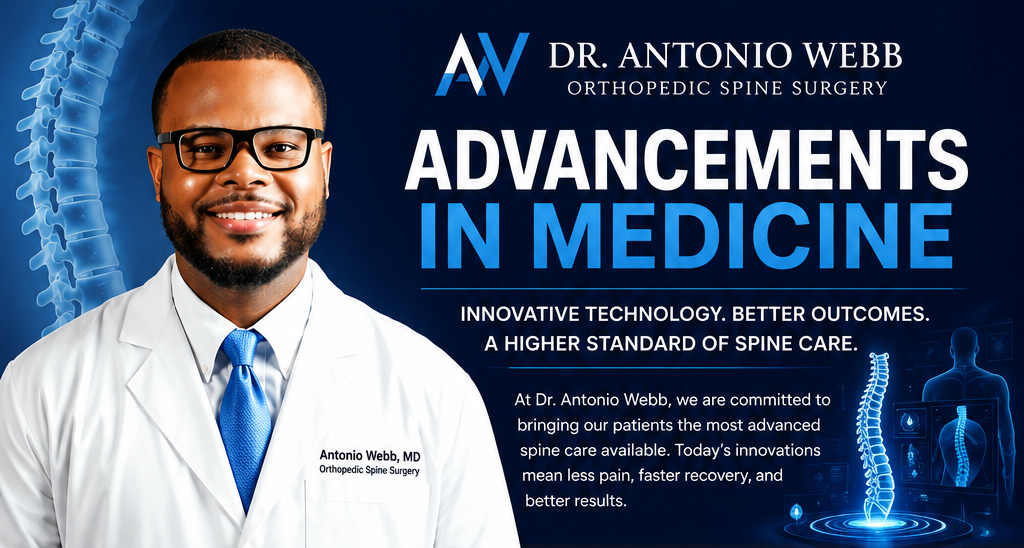
New Medical Advancements in Spine Surgery: How Modern Technology Is Changing Patient Care
Back and neck pain have long been among the leading causes of disability worldwide, but today’s spine surgery is dramatically different than it was even a decade ago. Thanks to remarkable advancements in technology, imaging, and surgical techniques, many patients are experiencing less pain, faster recoveries, and better long-term outcomes than ever before.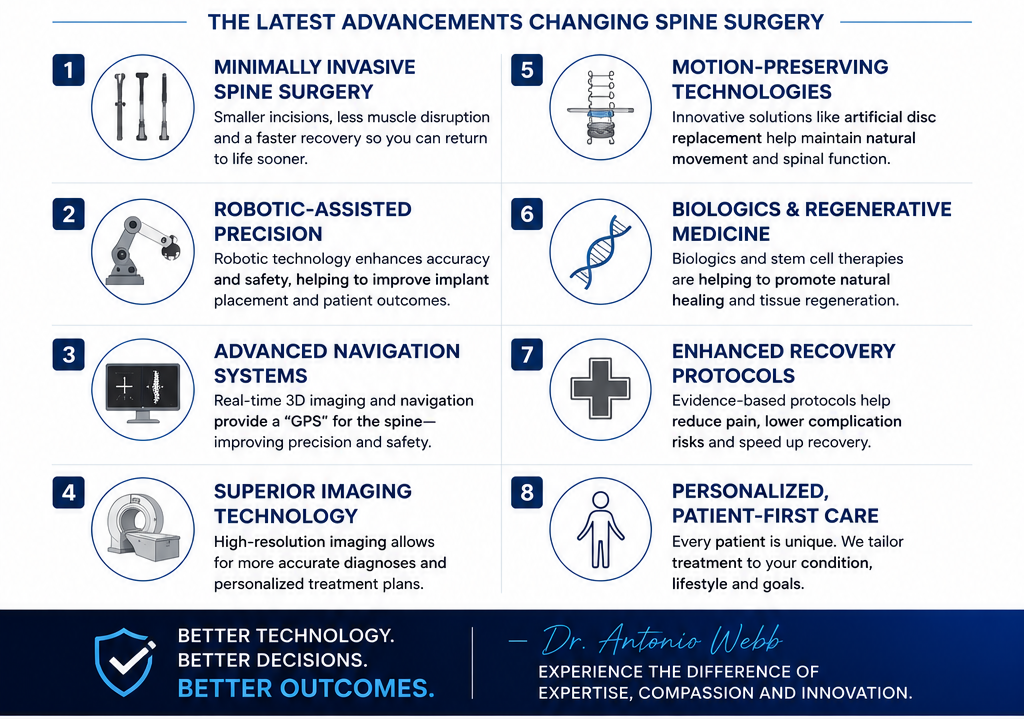
At San Antonio Spine Center, Dr. Antonio Webb believes the future of spine care isn’t just about performing surgery—it’s about performing the right surgery, for the right patient, using the least invasive approach possible.
- Minimally Invasive Spine Surgery (MISS)
One of the most significant advancements in modern spine care is minimally invasive spine surgery.
Instead of large incisions and extensive muscle disruption, surgeons now use specialized instruments and high-definition imaging to reach the spine through much smaller openings.
Potential benefits include:
- Smaller incisions
- Less blood loss
- Reduced postoperative pain
- Lower infection risk
- Shorter hospital stays
- Faster recovery
- Earlier return to work and daily activities
While not every patient is a candidate, minimally invasive techniques have become the preferred option for many spinal conditions.
- Robotic-Assisted Spine Surgery
Robotic technology has introduced an entirely new level of precision to spine surgery.
Using sophisticated computer guidance, surgeons can plan procedures before entering the operating room and place spinal implants with exceptional accuracy.
Robotic-assisted surgery can help improve:
- Surgical precision
- Implant placement
- Safety
- Surgical planning
- Overall consistency
It’s important to remember that the robot doesn’t perform the operation—the surgeon remains in complete control. The technology simply enhances accuracy and confidence throughout the procedure.
- Navigation Systems That Function Like GPS
Modern spinal navigation systems work much like a GPS for the surgeon.
Using real-time 3D imaging, these systems allow physicians to visualize spinal anatomy during surgery with remarkable detail.
Benefits include:
- Increased precision
- Smaller surgical exposure
- Better implant positioning
- Reduced radiation exposure in some cases
- Enhanced patient safety
- Artificial Disc Replacement
For certain patients with degenerative disc disease, artificial disc replacement may provide an alternative to spinal fusion.
Rather than permanently joining two vertebrae together, artificial discs are designed to preserve motion within the spine.
Potential advantages include:
- Improved flexibility
- More natural movement
- Reduced stress on neighboring spinal levels
- Faster return to activity for appropriate candidates
Patient selection remains critical, and not everyone is an ideal candidate for this procedure.
- Better Imaging Means Better Decisions
Advancements in MRI, CT scans, and digital imaging now allow spine specialists to diagnose conditions with far greater precision than in the past.
These improvements help physicians:
- Identify the true source of pain
- Avoid unnecessary procedures
- Create personalized treatment plans
- Monitor recovery more effectively
Better information often leads to better outcomes.
- Motion-Preserving Spine Procedures
Modern spine surgery increasingly focuses on preserving the body’s natural movement whenever possible.
New techniques aim to stabilize the spine without unnecessarily limiting mobility, helping patients maintain an active lifestyle after treatment.
- Enhanced Recovery After Surgery (ERAS)
Today’s recovery begins before surgery even starts.
Enhanced Recovery After Surgery (ERAS) protocols combine evidence-based strategies that help patients recover faster while minimizing complications.
These programs often include:
- Better pain management
- Earlier walking after surgery
- Improved nutrition
- Reduced opioid use
- Personalized rehabilitation plans
The result is often a smoother, more comfortable recovery experience.
- Personalized Spine Care
Perhaps the greatest advancement isn’t a piece of equipment—it’s the shift toward individualized treatment.
Modern spine specialists recognize that no two patients experience pain the same way.
Instead of recommending surgery as the first solution, physicians now consider:
- Lifestyle
- Activity level
- Overall health
- Imaging findings
- Personal goals
- Non-surgical treatment options
This patient-centered approach helps ensure each individual receives the treatment that’s best for their unique condition.
The Future of Spine Care Is Here
Advancements in spine surgery continue to transform how back and neck conditions are treated. With innovations in minimally invasive techniques, robotic assistance, advanced imaging, and personalized treatment planning, today’s patients have more options than ever before.
However, the most important advancement isn’t technology alone—it’s having an experienced spine specialist who knows when to use it and when conservative care is the better choice.
At San Antonio Spine Center, Dr. Antonio Webb combines cutting-edge surgical technology with a compassionate, patient-first philosophy. Every treatment plan is designed to relieve pain, restore function, and help patients return to the life they enjoy.
Ready to Take the Next Step?
If chronic back or neck pain is limiting your quality of life, schedule a consultation with Dr. Antonio Webb to learn about today’s most advanced spine treatment options. Together, you can determine the safest, most effective path toward lasting relief.