San Antonio Spine Clinic

San Antonio Spine Surgeon Dr. Antonio Webb: Don’t Let Back Pain Ruin Your Holidays

Holiday Back Pain, Neck Pain, and Sciatica Relief in San Antonio, Texas

The holiday season is a time for family, celebrations, travel, and making memories. But for many people in San Antonio, the holidays can also bring something far less enjoyable: back pain, neck pain, and sciatica.

Between long holiday road trips, lifting heavy luggage, decorating the house, preparing Thanksgiving dinner, and spending hours shopping, your spine may experience more stress than usual.

If you’re experiencing persistent back or neck pain this holiday season, San Antonio spine surgeon Dr. Antonio Webb offers specialized spine evaluations and personalized treatment options designed to help patients understand their symptoms and take the next steps toward relief.

As a board-certified, fellowship-trained orthopedic spine surgeon in San Antonio, Texas, Dr. Webb specializes in diagnosing and treating conditions affecting the cervical, thoracic, and lumbar spine.

Don’t let back pain take center stage this holiday season. Dr. Webb has got your back!

Why Back Pain Can Get Worse During the Holidays

From Thanksgiving through Christmas and New Year’s Day, holiday activities can place additional demands on your back and neck.

  1. Holiday Travel and Long Road Trips

Whether you’re traveling from San Antonio to Dallas, Houston, Austin, or visiting family across Texas, prolonged sitting can aggravate existing spinal conditions.

Long periods behind the wheel may contribute to stiffness and discomfort, particularly for individuals experiencing:

  • Herniated or bulging discs
  • Sciatica and radiating leg pain
  • Lumbar spinal stenosis
  • Degenerative disc disease
  • Chronic lower back pain

If you’re experiencing recurring pain after long periods of sitting, a spine specialist can help determine whether an underlying condition may be contributing to your symptoms.

  1. Lifting Christmas Decorations and Heavy Packages

Decorating for Christmas is a holiday tradition, but lifting heavy boxes, Christmas trees, and decorations can strain the muscles and supporting structures of the spine.

Improper lifting techniques may aggravate existing back problems.

When lifting holiday decorations, keep objects close to your body, avoid twisting while carrying heavy items, and ask for assistance when necessary.

  1. Holiday Shopping and Standing for Long Periods

Walking through shopping centers, standing in long checkout lines, and carrying heavy shopping bags can aggravate certain back and leg symptoms.

For some individuals, especially those with lumbar spinal stenosis, prolonged standing or walking may cause discomfort, numbness, or weakness in the legs.

If your symptoms consistently interfere with walking or everyday activities, consider scheduling an evaluation with a qualified spine specialist.

When Should You See a San Antonio Spine Surgeon for Back Pain?

Not every episode of back pain requires surgery. In fact, many spinal conditions can initially be managed with conservative treatment.

However, persistent or worsening symptoms deserve attention.

Consider scheduling a spine evaluation if you experience:

  • Back pain that persists despite appropriate rest and conservative care
  • Neck pain that radiates into the shoulders or arms
  • Sciatica or shooting pain down one or both legs
  • Persistent tingling or numbness in the hands, arms, feet, or legs
  • Difficulty walking or standing because of back or leg symptoms
  • Weakness or reduced mobility that interferes with daily activities

Important: New or worsening muscle weakness requires prompt medical evaluation. Back pain accompanied by new bladder or bowel dysfunction, numbness around the groin, or rapidly progressing neurological symptoms may indicate a medical emergency and requires immediate emergency care.

Meet Dr. Antonio Webb: Board-Certified San Antonio Spine Surgeon

Finding the right spine surgeon in San Antonio begins with understanding a physician’s qualifications, experience, and approach to patient care.

Dr. Antonio Webb, MD, is a board-certified orthopedic surgeon who completed advanced fellowship training in spine surgery at the Texas Back Institute.

His expertise includes the evaluation and treatment of complex spinal conditions, degenerative spine disorders, cervical and lumbar conditions, spinal deformities, and injuries affecting the spine.

Dr. Webb emphasizes patient education, individualized treatment planning, and conservative care whenever appropriate.

His philosophy is straightforward: Surgery should be considered when clinically necessary, not simply because a patient is experiencing back pain.

Patients seeking a spine specialist in San Antonio can receive a comprehensive evaluation to better understand their condition and available treatment options.

Minimally Invasive Spine Surgery in San Antonio, TX

For patients who require surgical intervention, advances in spine surgery have expanded the treatment options available for certain spinal conditions.

Dr. Antonio Webb offers minimally invasive spine surgery in San Antonio for appropriately selected patients.

Depending on the diagnosis and procedure, minimally invasive techniques may offer potential benefits such as smaller incisions, less disruption of surrounding muscle tissue, reduced blood loss, and shorter hospital stays compared with some traditional open procedures.

However, minimally invasive surgery is not appropriate for every patient, and recovery and outcomes vary.

Dr. Webb’s areas of expertise include:

  • Minimally Invasive Spine Surgery: Surgical approaches designed to limit unnecessary disruption of surrounding tissue when clinically appropriate.
  • Herniated Disc Treatment: Evaluation and treatment of damaged spinal discs that may compress nearby nerves.
  • Sciatica Treatment: Identifying the underlying causes of radiating nerve pain and discussing suitable treatment options.
  • Artificial Disc Replacement: A motion-preserving surgical option for certain qualifying cervical or lumbar disc conditions.
  • Spinal Stenosis Treatment: Addressing narrowing around spinal nerves that may cause pain, numbness, or difficulty walking.
  • Robotic-Assisted Spine Surgery: Advanced surgical technology used in selected procedures when appropriate.

The goal is not simply to treat an image or diagnosis. It is to develop a treatment plan that addresses the patient’s symptoms, function, and individual needs.

Start the New Year With a Plan for Better Spine Health

Every January, people across San Antonio make resolutions to exercise more, improve their health, and enjoy a more active lifestyle.

But persistent back pain, neck pain, or sciatica can make those goals difficult.

If spinal discomfort has prevented you from enjoying activities you love, the holiday season may be a good opportunity to schedule an evaluation and develop a plan for the coming year.

Whether your symptoms require physical therapy, medications, other nonsurgical treatment, or a discussion about surgical options, understanding the source of your pain is an important first step.

You don’t have to wait until your symptoms become unbearable to seek medical advice.

Spine Care for San Antonio, Schertz, and Surrounding Communities

Dr. Antonio Webb provides specialized orthopedic spine care for patients throughout the greater San Antonio area.

His clinic locations serve patients in San Antonio and Schertz, including individuals traveling from nearby communities such as:

  • Stone Oak and North Central San Antonio
  • Medical Center and Northwest San Antonio
  • Alamo Heights
  • Leon Valley
  • Helotes
  • Schertz and Cibolo
  • Universal City and Live Oak
  • New Braunfels
  • Converse and Selma

Patients searching for a San Antonio spine surgeon, back pain specialist, or minimally invasive spine surgeon near them can contact Dr. Webb’s office to discuss appointment availability.

Frequently Asked Questions About Spine Care During the Holidays

Should I see a spine surgeon for lower back pain?

Persistent lower back pain does not automatically mean surgery is necessary. A spine surgeon can evaluate your symptoms, review appropriate imaging when indicated, and recommend conservative or surgical treatment options based on your diagnosis.

Can holiday travel make sciatica worse?

Yes. Extended sitting during road trips or flights may aggravate symptoms in some individuals with sciatica. Taking appropriate movement breaks, adjusting your seating position, and avoiding prolonged immobility may help reduce discomfort.

Does Dr. Antonio Webb perform minimally invasive spine surgery in San Antonio?

Yes. Dr. Webb offers minimally invasive spine surgery for selected spinal conditions. Eligibility depends on the patient’s diagnosis, symptoms, imaging findings, and overall medical condition.

Is surgery always necessary for a herniated disc?

No. Many herniated discs can be managed without surgery. Surgical treatment may be considered for selected patients with persistent symptoms, significant nerve compression, or neurological deficits.

Where is Dr. Antonio Webb’s spine clinic located?

Dr. Webb has clinic locations in San Antonio and Schertz, Texas. Patients can contact his office to request an appointment and confirm the most appropriate location.

Don’t Let Spine Pain Follow You Into the New Year

The holidays should be filled with meaningful moments, not constant worry about your back or neck.

If chronic back pain, sciatica, or neck discomfort is affecting your daily activities, consider scheduling a consultation with Dr. Antonio Webb, a board-certified, fellowship-trained spine surgeon in San Antonio, Texas.

With a personalized approach to spine care and expertise in both conservative and surgical treatment options, Dr. Webb helps patients better understand their conditions and make informed decisions about their care.

This holiday season, give yourself the gift of a plan for better spine health.

Schedule a Consultation With Dr. Antonio Webb

San Antonio Spine Clinic

9150 Huebner Road, Suite 290
San Antonio, TX 78240

Schertz Spine Clinic

6704 Guada Coma
Schertz, TX 78154

Call: (210) 293-9380

Website: https://antoniowebbmd.com

Request an Appointment: https://antoniowebbmd.com/appointment-request/

Dr. Webb Has Got Your Back — This Holiday Season and Beyond.

Medical disclaimer: This article provides general educational information and does not replace individualized medical advice, diagnosis, or treatment.
San Antonio Spine Clinic

New Medical Advancements in Spine Surgery

New Medical Advancements in Spine Surgery: How Modern Technology Is Changing Patient Care

Back and neck pain have long been among the leading causes of disability worldwide, but today’s spine surgery is dramatically different than it was even a decade ago. Thanks to remarkable advancements in technology, imaging, and surgical techniques, many patients are experiencing less pain, faster recoveries, and better long-term outcomes than ever before.

At San Antonio Spine Center, Dr. Antonio Webb believes the future of spine care isn’t just about performing surgery—it’s about performing the right surgery, for the right patient, using the least invasive approach possible.

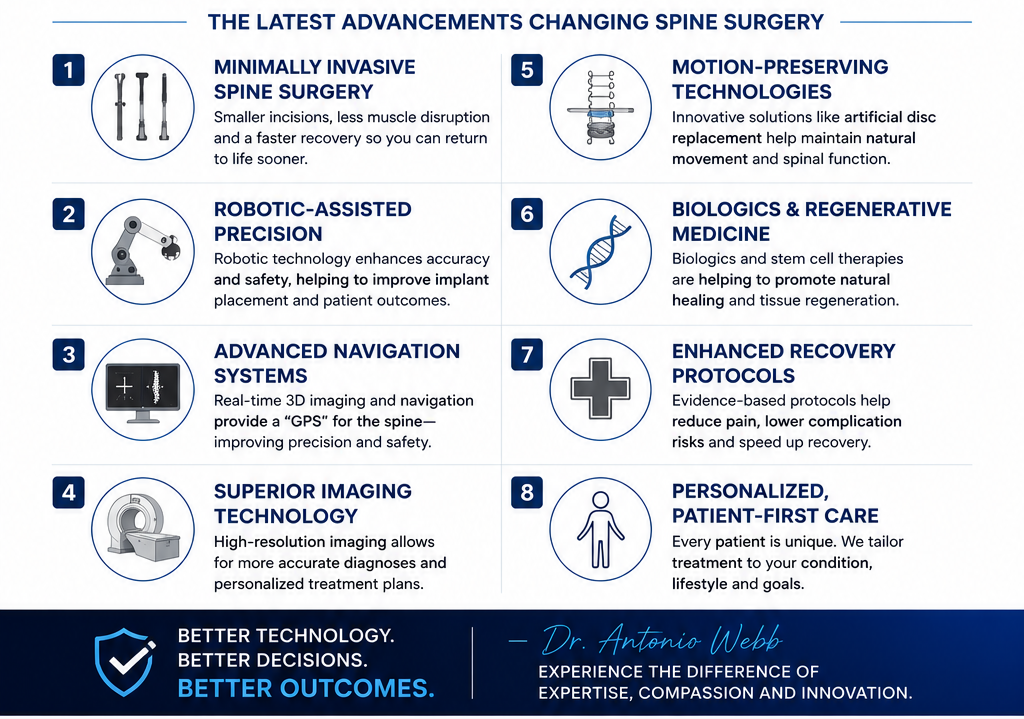
  1. Minimally Invasive Spine Surgery (MISS)

One of the most significant advancements in modern spine care is minimally invasive spine surgery.

Instead of large incisions and extensive muscle disruption, surgeons now use specialized instruments and high-definition imaging to reach the spine through much smaller openings.

Potential benefits include:

  • Smaller incisions
  • Less blood loss
  • Reduced postoperative pain
  • Lower infection risk
  • Shorter hospital stays
  • Faster recovery
  • Earlier return to work and daily activities

While not every patient is a candidate, minimally invasive techniques have become the preferred option for many spinal conditions.

  1. Robotic-Assisted Spine Surgery

Robotic technology has introduced an entirely new level of precision to spine surgery.

Using sophisticated computer guidance, surgeons can plan procedures before entering the operating room and place spinal implants with exceptional accuracy.

Robotic-assisted surgery can help improve:

  • Surgical precision
  • Implant placement
  • Safety
  • Surgical planning
  • Overall consistency

It’s important to remember that the robot doesn’t perform the operation—the surgeon remains in complete control. The technology simply enhances accuracy and confidence throughout the procedure.

  1. Navigation Systems That Function Like GPS

Modern spinal navigation systems work much like a GPS for the surgeon.

Using real-time 3D imaging, these systems allow physicians to visualize spinal anatomy during surgery with remarkable detail.

Benefits include:

  • Increased precision
  • Smaller surgical exposure
  • Better implant positioning
  • Reduced radiation exposure in some cases
  • Enhanced patient safety
  1. Artificial Disc Replacement

For certain patients with degenerative disc disease, artificial disc replacement may provide an alternative to spinal fusion.

Rather than permanently joining two vertebrae together, artificial discs are designed to preserve motion within the spine.

Potential advantages include:

  • Improved flexibility
  • More natural movement
  • Reduced stress on neighboring spinal levels
  • Faster return to activity for appropriate candidates

Patient selection remains critical, and not everyone is an ideal candidate for this procedure.

  1. Better Imaging Means Better Decisions

Advancements in MRI, CT scans, and digital imaging now allow spine specialists to diagnose conditions with far greater precision than in the past.

These improvements help physicians:

  • Identify the true source of pain
  • Avoid unnecessary procedures
  • Create personalized treatment plans
  • Monitor recovery more effectively

Better information often leads to better outcomes.

  1. Motion-Preserving Spine Procedures

Modern spine surgery increasingly focuses on preserving the body’s natural movement whenever possible.

New techniques aim to stabilize the spine without unnecessarily limiting mobility, helping patients maintain an active lifestyle after treatment.

  1. Enhanced Recovery After Surgery (ERAS)

Today’s recovery begins before surgery even starts.

Enhanced Recovery After Surgery (ERAS) protocols combine evidence-based strategies that help patients recover faster while minimizing complications.

These programs often include:

  • Better pain management
  • Earlier walking after surgery
  • Improved nutrition
  • Reduced opioid use
  • Personalized rehabilitation plans

The result is often a smoother, more comfortable recovery experience.

  1. Personalized Spine Care

Perhaps the greatest advancement isn’t a piece of equipment—it’s the shift toward individualized treatment.

Modern spine specialists recognize that no two patients experience pain the same way.

Instead of recommending surgery as the first solution, physicians now consider:

  • Lifestyle
  • Activity level
  • Overall health
  • Imaging findings
  • Personal goals
  • Non-surgical treatment options

This patient-centered approach helps ensure each individual receives the treatment that’s best for their unique condition.

The Future of Spine Care Is Here

Advancements in spine surgery continue to transform how back and neck conditions are treated. With innovations in minimally invasive techniques, robotic assistance, advanced imaging, and personalized treatment planning, today’s patients have more options than ever before.

However, the most important advancement isn’t technology alone—it’s having an experienced spine specialist who knows when to use it and when conservative care is the better choice.

At San Antonio Spine Center, Dr. Antonio Webb combines cutting-edge surgical technology with a compassionate, patient-first philosophy. Every treatment plan is designed to relieve pain, restore function, and help patients return to the life they enjoy.

Ready to Take the Next Step?

If chronic back or neck pain is limiting your quality of life, schedule a consultation with Dr. Antonio Webb to learn about today’s most advanced spine treatment options. Together, you can determine the safest, most effective path toward lasting relief.


The Spine Beat WebbBlog

What to Look for When Choosing a San Antonio Spine Surgeon

What to Look for When Choosing a San Antonio Spine Surgeon

Back pain, neck pain, numbness, sciatica, and spinal conditions can significantly impact your quality of life. If conservative treatments have failed and you’re considering surgical options, choosing the right spine surgeon may be one of the most important healthcare decisions you’ll ever make.

With numerous providers serving South Texas, how do you know which surgeon is right for you?

Here are several key factors every patient should consider when selecting a San Antonio spine surgeon.

1. Look for Specialized Spine Training

Not all surgeons who perform spine procedures have the same level of specialized training.

Many orthopedic surgeons and neurosurgeons perform spine surgery, but it’s important to understand how much of their practice is dedicated specifically to the spine.

A surgeon who focuses primarily on spinal disorders often has extensive experience treating conditions such as:

  • Herniated discs
  • Spinal stenosis
  • Degenerative disc disease
  • Sciatica
  • Scoliosis
  • Cervical spine disorders
  • Lumbar spine disorders
  • Spinal instability

The more specialized the surgeon’s practice, the more likely they are to have experience treating a wide variety of spinal conditions.

2. Experience Matters

When it comes to spine surgery, experience counts.

Patients should ask:

  • How many spine procedures does the surgeon perform annually?
  • How often do they perform the procedure being recommended?
  • Do they routinely treat complex spinal conditions?

A surgeon who regularly performs advanced procedures may be better equipped to manage unexpected challenges and tailor treatment plans to each patient’s specific needs.

3. Consider a Conservative Approach

One of the biggest misconceptions about spine surgeons is that they recommend surgery for everyone.

The best spine surgeons understand that surgery is often the last step—not the first.

Look for a physician who explores conservative treatment options such as:

  • Physical therapy
  • Injections
  • Pain management
  • Activity modification
  • Lifestyle changes

A trustworthy surgeon will only recommend surgery when it is truly in the patient’s best interest.

4. Evaluate Communication and Bedside Manner

Patients should never feel rushed through an appointment.

A quality spine surgeon takes time to:

  • Listen to your concerns
  • Explain your diagnosis
  • Review imaging studies
  • Discuss treatment options
  • Answer questions thoroughly

The best patient outcomes often begin with strong communication and trust between physician and patient.

5. Research Their Reputation

Today’s patients have access to more information than ever before.

Before choosing a surgeon, consider reviewing:

  • Patient testimonials
  • Online reviews
  • Educational content
  • Community involvement
  • Professional credentials

Many leading spine surgeons also publish educational videos, articles, and resources that help patients better understand their conditions and treatment options.

These resources can provide valuable insight into the physician’s expertise and philosophy of care.

6. Explore Minimally Invasive Options

Advances in modern spine surgery have created opportunities for less invasive procedures with potentially shorter recovery times.

Depending on your condition, minimally invasive approaches may offer:

  • Smaller incisions
  • Reduced muscle disruption
  • Less postoperative discomfort
  • Faster recovery
  • Earlier return to daily activities

Not every patient is a candidate, but it’s important to choose a surgeon who can discuss all available treatment options.

7. Choose a Surgeon Who Educates Patients

The best physicians don’t simply perform procedures—they educate.

A surgeon who invests time in patient education demonstrates a commitment to helping individuals make informed healthcare decisions.

Educational resources such as videos, articles, seminars, and patient guides can help patients feel more confident throughout the treatment process.

8. Look Beyond the Procedure

Choosing a spine surgeon isn’t just about the operation itself.

Consider the entire patient experience:

  • Office staff responsiveness
  • Appointment availability
  • Follow-up care
  • Accessibility
  • Communication throughout recovery

A strong support team can make a significant difference before, during, and after treatment.

Finding the Right San Antonio Spine Surgeon

Every patient deserves personalized care and a physician who takes the time to understand their goals, concerns, and lifestyle.

The right spine surgeon should combine experience, expertise, compassion, and a commitment to patient education.

Whether you’re struggling with chronic neck pain, lower back pain, sciatica, or a more complex spinal condition, taking the time to research your options can help you make a confident and informed decision.

If you’re considering treatment for a spine condition, schedule a consultation with a qualified San Antonio spine specialist to discuss your diagnosis and explore the treatment options that may be right for you.

Your spine is too important to trust to just anyone.

The Spine Beat WebbBlog

10 Spine Surgeons To Know by Becker’s Spine Review

10 Spine Surgeons To Know by Becker’s Spine Review

Article Source: Becker’s Spine

Spine surgery is evolving rapidly as minimally invasive procedures, motion-preserving implants and outpatient spine techniques continue transforming how complex spinal conditions are treated. Across the U.S., spine surgeons are advancing the field through innovation in deformity correction, cervical disc replacement, spinal reconstruction and patient-centered recovery pathways.

The following surgeons stand out for their clinical expertise, research contributions and leadership helping shape the future of spine care.

Editor’s note: This is not a comprehensive or ranked list. Becker’s does not endorse any individual featured. To nominate a physician for a future list, contact seydis@beckershealthcare.com

  1. Munish Gupta, MD. Hospital for Special Surgery (New York City): Dr. Gupta is a nationally recognized spine surgeon specializing in complex spinal deformity surgery for both adults and children, with expertise in scoliosis, kyphosis, spondylolisthesis and flatback syndrome. 

Throughout his career, he has built leading spinal deformity programs at major academic institutions including University of California, Davis and St. Louis-based Washington University School of Medicine, where he trained numerous national and international spine fellows in advanced reconstructive techniques. Dr. Gupta is vice president of the Scoliosis Research Society and is set to become president in 2027, underscoring his influence in shaping the future of spinal deformity surgery and education.

  1. Lauren Matteini, MD. Fox Valley Orthopedics (Geneva, Ill.): Dr. Matteini is a fellowship-trained spine surgeon specializing in minimally invasive cervical, thoracic and lumbar spine surgery. Her expertise includes degenerative disc disease, spinal stenosis, nerve impingement, scoliosis and complex revision spine procedures, with a particular focus on motion-preserving cervical disc replacement and minimally invasive fusion techniques designed to reduce recovery time and postoperative pain.

In addition to her clinical work, Dr. Matteini is recognized for advancing spinal surgery research and mentoring women pursuing careers in medicine.

  1. Wesley Bronson, MD. Mount Sinai Health System (New York City): Dr. Bronson is a spine surgeon at Mount Sinai specializing in minimally invasive spine surgery and complex revision spinal procedures. His clinical expertise spans cervical, thoracic and lumbar spine conditions, including adult spinal deformity, scoliosis and failed back surgery.

Dr. Bronson is widely respected for his work in advanced spinal reconstruction and minimally invasive techniques, and he has published numerous peer-reviewed studies and textbook chapters on spine surgery and spinal disorders.

  1. Jacob Buchowski, MD. Washington University School of Medicine/Barnes-Jewish Hospital (St. Louis): Dr. Buchowski is chief of the Spine Division at Washington University and a nationally recognized spine surgeon specializing in cervical and lumbar degenerative disorders, spinal stenosis, nerve compression and spinal tumors.

His expertise ranges from minimally invasive spine procedures to complex adult reconstructive surgery, with a strong focus on restoring function and improving quality of life through individualized care plans. Dr. Buchowski has held numerous leadership roles in national and international spine societies and is widely respected for his contributions to spinal deformity surgery, spine education and multidisciplinary spine care.

  1. Stuart Hershman, MD. Massachusetts General Hospital (Boston): Dr. Hershman is chief of the orthopedic spine service at Massachusetts General Hospital and director of adult spinal deformity and complex spinal reconstruction. A nationally recognized spine surgeon, he specializes in complex cervical, thoracic and lumbar spine disorders, with particular expertise in spinal deformity, revision spine surgery, cervical myelopathy and surgery of the osteoporotic spine. 

Dr. Hershman has helped expand Mass General’s complex spine program through his clinical work and research and is widely respected for advancing outcomes in challenging spinal reconstruction cases through leadership in national spine societies and ongoing research initiatives.

  1. Comron Saifi, MD. Houston Methodist Baytown: Dr. Saifi is medical director of the Houston Methodist Spine Center at Baytown and holder of the C. James and Carole Walter Looke chair in orthopedic spine surgery. 

An orthopedic spine surgeon, he specializes in minimally invasive spine surgery, cervical disc replacement and pediatric and adult spinal deformity care, including scoliosis and kyphosis. Previously director of clinical spine research at the Philadelphia-based University of Pennsylvania, Dr. Saifi is widely respected for advancing outpatient spine surgery, motion-preserving techniques and research focused on improving spine care outcomes and recovery.

  1. Leonel Hunt, MD. Commons Clinic/Cedars-Sinai Spine Center (Los Angeles): Dr. Hunt is a spine surgeon specializing in spinal deformity correction, minimally invasive spine surgery and motion-preserving techniques for both adult and pediatric patients. 

A partner at Commons Clinic and attending surgeon at Cedars-Sinai Spine Center and Cedars-Sinai Orthopedic Center, he is nationally recognized for advancing outpatient spine surgery, cervical disc replacement and complex spinal reconstruction. Dr. Hunt’s research focuses on developing innovative surgical technologies and next-generation treatments for spine-related neck and back pain, with his work presented at national and international conferences and published in peer-reviewed journals.

  1. Rebecca Kuo, MD. UChicago Medicine (Chicago): Dr. Kuo is an orthopedic spine surgeon at UChicago Medicine specializing in complex spinal disorders affecting both adult and pediatric patients. 

Her expertise includes spinal stenosis, cervical and lumbar disc disease, spinal deformity, tumors, infections and spinal trauma, with advanced training in both minimally invasive and motion-preserving spine surgery techniques. Dr. Kuo is widely respected for her patient-centered approach to spine care, combining complex surgical expertise with a focus on education, collaboration and individualized treatment planning.

  1. Heidi Hullinger, MD. New Jersey Spine Specialists (Summit): Dr. Hullinger is an orthopedic spine surgeon specializing in complex spinal deformity, spinal tumors and minimally invasive spine surgery for both adult and pediatric patients. 

She has expertise spanning complex reconstructive spine surgery to sports-related spine conditions, with a strong focus on helping patients return to high levels of activity. Dr. Hullinger is also widely recognized for her leadership in spine policy and medical education through roles with the American Medical Association and North American Spine Society, where she helps shape evidence-based spine surgery guidelines and physician advocacy initiatives. She currently serves as an associate professor of orthopaedics at New Brunswick, N.J.-based Rutgers University, where she trains and mentors orthopedic residents in spinal surgery.

  1. Antonio Webb, MD. South Texas Surgical and Specialty Group (San Antonio): Dr. Webb is an orthopedic spine surgeon specializing in minimally invasive spine surgery, cervical and lumbar disc replacement, spinal deformity and complex degenerative spine conditions.

A U.S. Air Force veteran who served as a medic during the Iraq War, Dr. Webb is widely recognized for combining military service, global medical experience and advanced spine training into a patient-centered spine practice. He has contributed to research on cervical and lumbar artificial disc replacement and is respected for advancing motion-preserving spine surgery techniques.

At the Becker’s 23rd Annual Spine, Orthopedic and Pain Management-Driven ASC + The Future of Spine Conference, taking place June 11-13 in Chicago, spine surgeons, orthopedic leaders and ASC executives will come together to explore minimally invasive techniques, ASC growth strategies and innovations shaping the future of outpatient spine care. Apply for complimentary registration now.

Article Source – Becker’s Spine Review

_______

Appointments are now being accepted.

For media inquiries or patient consultations, contact:

Antonio Webb, MD
9150 Huebner Rd, Suite 290
San Antonio, TX 78240
Phone: 210-293-9380

The Spine Beat WebbBlog

SAN ANTONIO SPINE SURGEON ANTONIO WEBB LAUNCHES PHYSICIAN OWNED PRACTICE GROUP

FOR IMMEDIATE RELEASE

WORLD RENOWN SAN ANTONIO SPINE SURGEON DR. ANTONIO WEBB LAUNCHES NEW PHYSICIAN-OWNED, ORTHOPEDIC PRACTICE GROUP IN SAN ANTONIO AND SCHERTZ

SAN ANTONIO, TX — At a time when more healthcare systems are being absorbed by large corporations and private equity groups, nationally recognized spine surgeon Dr. Antonio Webb is taking a different path.

Dr. Webb has officially launched a new physician-owned spine practice serving patients throughout San Antonio, Schertz, and surrounding South Texas communities.

The move represents more than a new office location, it represents a growing movement back toward patient-focused healthcare led by physicians instead of corporate decision-makers.

South Texas Surgical and Speciality Group (STSSG)

New Practice Locations:

San Antonio Spine Clinic Location

9150 Huebner Rd, Suite 290
San Antonio, TX 78240
Phone: 210-293-9380

Schertz Spine Clinic Location

6704 Guada Coma
Schertz, TX 78154
Phone: 210-293-9380

Known nationally as one of the most recognized spine surgeons online and widely regarded as the #1 Spine Surgeon on YouTube, Dr. Webb has built a reputation for combining elite surgical expertise with direct patient education, transparency, and accessibility.

Now, through his new physician-owned model, Dr. Webb says patients can expect something increasingly rare in modern medicine: care driven by physicians — not corporations.

“Patients are tired of feeling like numbers,” said Dr. Webb. “This practice was built to put patient care, education, and outcomes first. Decisions should be made in the exam room, not the boardroom.”

The new practice will offer advanced spine care including:

• Minimally Invasive Spine Surgery
• Herniated Disc Treatment
• Sciatica Relief
• Neck and Back Pain Solutions
• Disc Replacement Procedures
• Revision Spine Surgery
• Non-Surgical Treatment Options

Dr. Webb’s transition comes during a major shift in healthcare nationwide, where physician-owned practices are becoming increasingly uncommon due to hospital acquisitions and corporate consolidation.

But Dr. Webb believes independence matters.

By maintaining physician ownership, the practice can prioritize innovation, personalized treatment plans, faster patient access, and a more direct relationship between doctor and patient.

The expansion also strengthens access to advanced spine care for patients across:
San Antonio, Schertz, Cibolo, Selma, Converse, Universal City, New Braunfels, and surrounding areas.

Appointments are now being accepted.

For media inquiries or patient consultations, contact:

Antonio Webb, MD
9150 Huebner Rd, Suite 290
San Antonio, TX 78240
Phone: 210-293-9380

San Antonio Spine Clinic The Spine Beat WebbBlog

Dr. Antonio Webb’s Health Career Day – June 7, 2025

Dr. Antonio Webb’s Health Career Day

– June 7, 2025

I’m excited to announce my 2nd Annual Dr. Webb Health Career Day!

This is a FREE event designed specifically for minority high school and college students who are passionate about medicine and want to explore careers in healthcare.

You’ll get the chance to:

  • Interact with doctors 
  • Learn about orthopedics, cardiology, nursing, plastic surgery & more
  • Participate in hands-on medical activities
  • Enjoy free lunch!

Date: Saturday June 7, 2025

Time: 9 AM – 2 PM

Location: St. Philip’s College – Center for Health Professions

Address: 1801 Martin Luther King Dr., San Antonio, TX 78203

(Park in lot 12 or 13)

Space is limited — scan the QR code or visit www.thewebbfamilyfoundation.org to register today!

Let’s inspire the next generation of healthcare leaders!

San Antonio Spine Clinic The Spine Beat WebbBlog

WebbSpace Soft Opening

WebbSpace Studios

Soft Opening

February 1st, 2024 Dr. Antonio Webb, an orthopedic surgeon, philanthropist, and content creator has embarked on a new entrepreneurial journey as the founder of the dual facility South Texas Spinal Clinic and WebbSpace. This state-of-the-art facility is redefining patient care by enhancing collaboration among specialists and streamlining treatment pathways while providing a creative space for content creators, podcasters, and photographers in the Schertz community.

More About WebbSpace

San Antonio Spine Clinic The Spine Beat WebbBlog

My 100th Surgery

My 100th Surgery!

Quite the milestone

Dr. Antonio Webb, a renowned spine surgeon in San Antonio, has reached a remarkable milestone—his 100th successful surgery. With a focus on precision, patient care, and innovative techniques, Dr. Webb has transformed the lives of countless individuals suffering from spine-related issues. This achievement not only highlights his expertise but also his unwavering commitment to improving the health and well-being of his patients. Learn more about Dr. Webb’s journey, his approach to spine surgery, and the significant impact he’s made in the San Antonio community.
San Antonio Spine Clinic The Spine Beat WebbBlog

Health Career Day June 8th

The Webb Family Foundation

Our mission is to give back through philanthropy, mentorship, training, and education! 🙌🏾

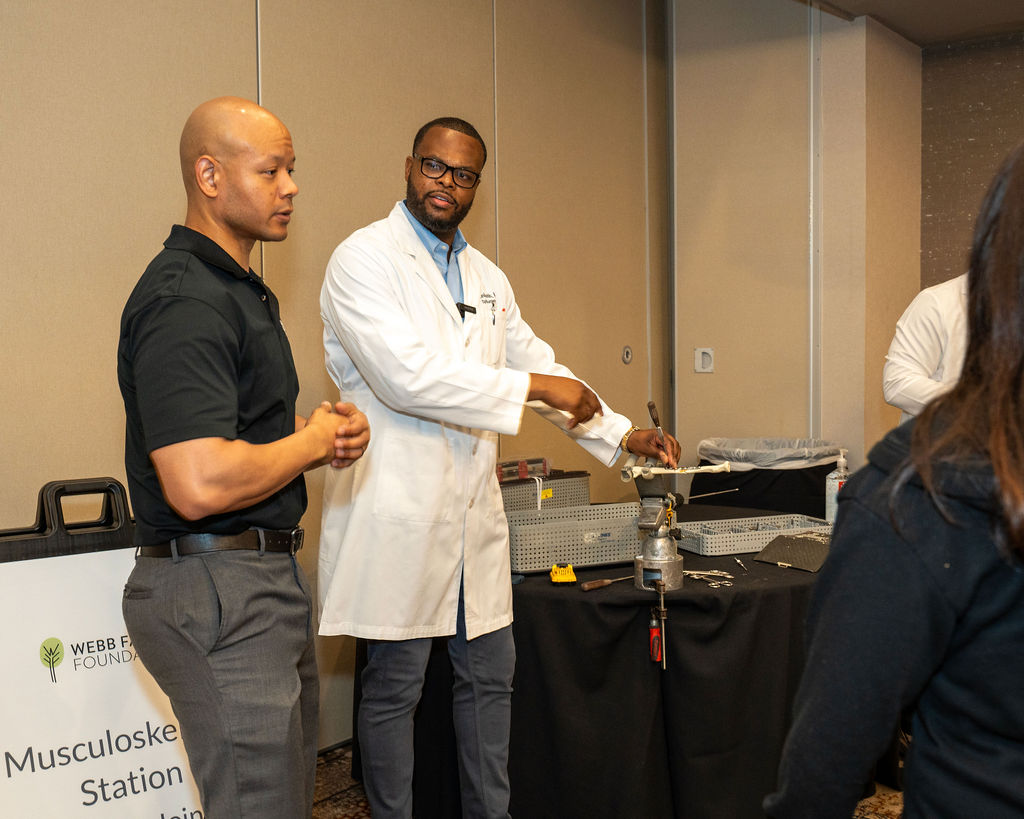
Participants engaged in an immersive experience, connecting directly with passionate doctors committed to fostering diversity in healthcare. Attendees didn’t just listen passively; they actively asked questions, shared insights, and gained invaluable perspectives from professionals in their desired fields.

Dr. Webb Health Career Day showcased a multitude of pathways within the medical field, catering to interests ranging from plastic cardiology to nursing and orthopedics. Attendees learned about the unique challenges and triumphs faced by minority healthcare professionals, gaining inspiration from those shaping the future of medicine.

San Antonio Spine Clinic The Spine Beat WebbBlog

(MITR) Using The Teligen Surgical Technology Platform

MITR Using The Teligen Surgical Technology Platform

Dr. Webb is the first spine surgeon in Texas to perform a minimally invasive microdiscectomy (MITR) using the Teligen surgical technology platform 🙌🏾

The Teligen Spine Surgical System is an advanced technology platform designed to enhance minimally invasive spinal surgeries. The system integrates various digital tools to improve visualization and surgical access, including a camera control system and HD camera. It aims to provide surgeons with a larger and clearer field of view, thereby improving surgical performance and patient outcomes.

This patient presented to my office with severe left leg pain. Imaging studies were consistent with a large disc herniation at the L5-S1 level. Postoperatively, she woke up with complete resolution of her leg pain.

image3 (002)